
Our experience at the Service Design Global Conference 2026
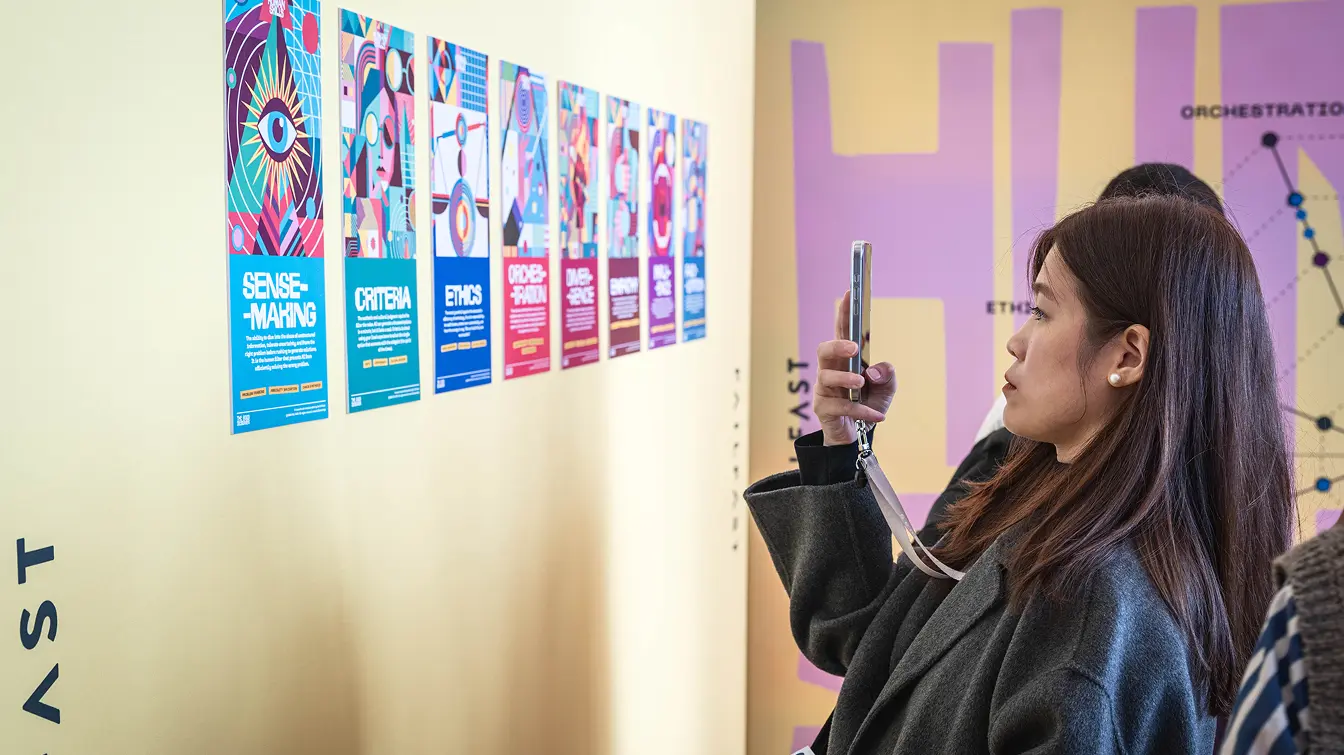
Fail Fast as Official Icon Partner at SDGC26
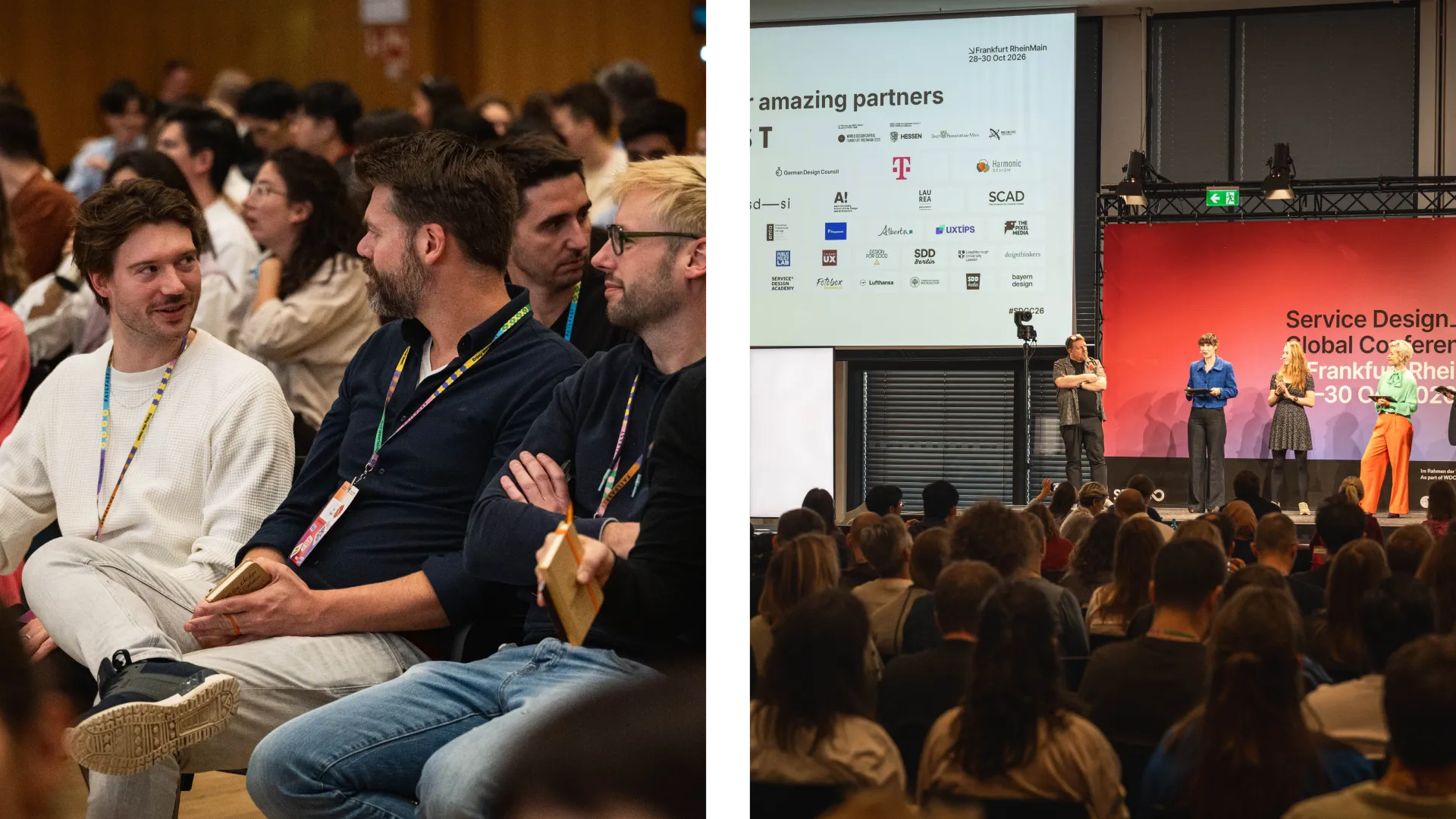
At Fail Fast Studio, we took part in the Service Design Global Conference 2026 (SDGC26) as an Official Icon Partner, and we have returned from Frankfurt RheinMain with a great feeling about the experience. Held from 28 to 30 October, the conference brought together professionals and organizations from around the world. We had the opportunity to share our work on the future of service design through a workshop, a talk and a collaborative activity at our stand. These three moments allowed us to explore a key question: how our profession is changing with the arrival of artificial intelligence, and the role that human skills continue to play.
Under the theme “Beyond Boundaries: Enabling Solutions that Shape Tomorrow”, this edition explored how service design can help organisations overcome existing limits and create more meaningful futures.
For years, service design has helped people understand technology. Now the challenge is to help technology understand people. At Fail Fast, we believe this means challenging common assumptions, embracing change and rethinking design. That is the perspective we took to Frankfurt.
Ideas and debates from de conference
The conference brought together different perspectives on the challenges facing service design. One conversation that ran through much of the event was how to integrate artificial intelligence into our work without losing sight of what people bring to the table.
Which skills will continue to make a difference? How does the role of designers change as technology takes on more and more tasks? These were some of the questions raised during the sessions and conversations over those days, connecting directly with the work we are developing at Fail Fast.
Our participation in SDGC26
This edition also gave us the opportunity to bring to the conference some of the work we are developing around The Good Designer, our project exploring the role of design professionals in the age of artificial intelligence.
Stay Human: Training the Skills AI Can't Replace - Workshop
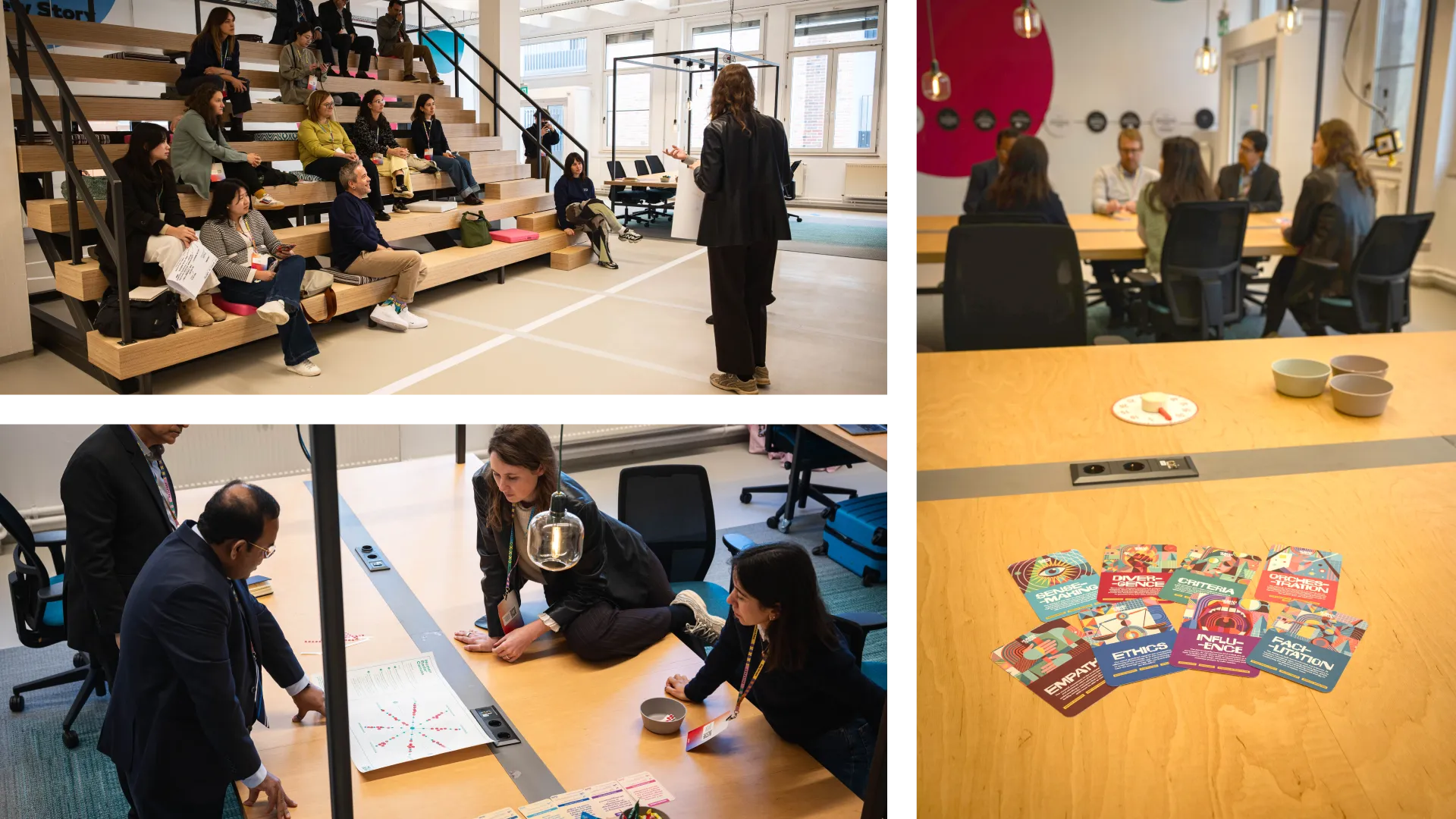
On the first day, we hosted our Stay Human: Training the Skills AI Can't Replace workshop, a hands-on session focused on identifying and strengthening the human skills that remain essential at a time when AI is transforming the way we work.
Using the Human Radar Canvas, the Human Skills Cards and real-world scenarios, participants worked collaboratively to put skills such as empathy, critical thinking and creativity into practice. Through group exercises and role-play activities, they explored different situations and stepped outside their usual perspectives to discover how these abilities can make a difference in their professional lives.
The workshop brought together 14 participants from different countries and professional backgrounds. This diversity of perspectives made the discussion richer, offered new viewpoints and opened the door to different ways of reflecting on the human skills we worked on during the session.
The Good Designer: Rethinking Service Design in the Age of AI - Talk
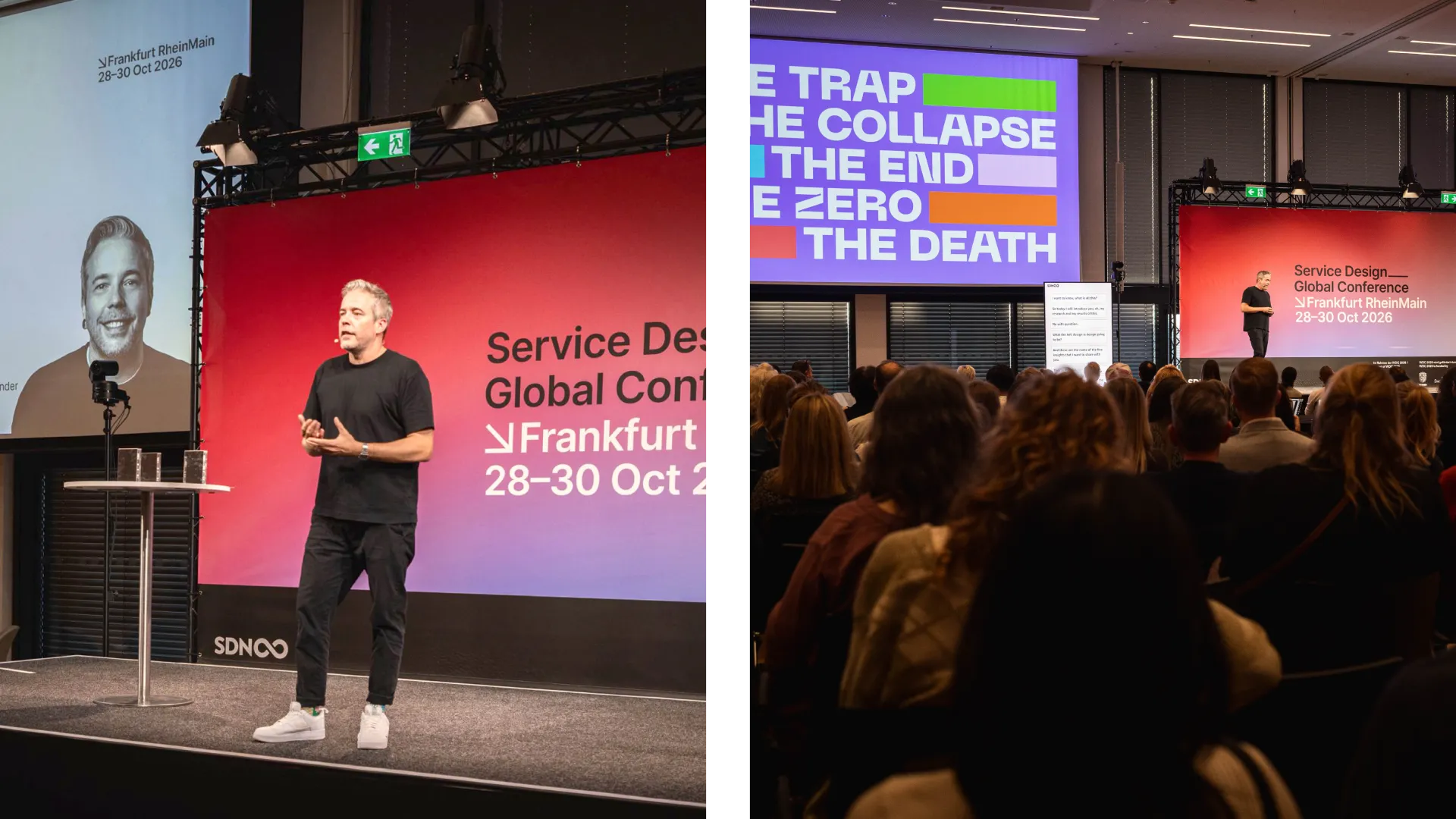
Ian Gehlhaar Prat took to the stage to present The Good Designer: Rethinking Service Design in the Age of AI and share the learnings from more than five months of conversations with design leaders across Europe. The talk focused on two central questions: what made a good designer before AI, and what it will take to be one in the future.
With around 500 attendees, the talk discussed how the role of designers is evolving as AI moves beyond supporting individual tasks and takes on more autonomous roles. This shift challenges traditional approaches to service design and requires us to go beyond individual touchpoints. Now it is about thinking how to orchestrate complex systems where people, AI agents and other non-human actors coexist, always keeping human needs and ethical boundaries at the centre.
The Human Skills Radar - Stand activity
Over the two days, our stand hosted an interactive activity, The Human Skills Radar, inviting visitors from across the service design community to contribute to a collaborative canvas and map how they perceived the maturity of different human skills.
By the end of the conference, we had created a rich and visually engaging Human Skills Radar. Although based on qualitative input from conference attendees, it offered an interesting snapshot of which skills people were most aligned on, and which had more room for development. Empathy and facilitation clearly stood out as strengths, while opinions on influence were more varied.
From our conversations at the stand with people from different industries across the service design community, we came away with a clear sense that these discussions are particularly important for teams and stakeholders as AI becomes increasingly integrated into our professional lives. The Human Skills Cards, the interactive activity and the practical exercises sparked a lot of interest, and we hope they inspired many people to bring these conversations and tools into their own teams and organizations.

5 talks that are still on our minds
SDGC26 brought together professionals who offered new perspectives on service design. Among the many presentations at the conference, we’ve selected five that inspired us and gave us some interesting ideas:
1. Monica Dalla Riva - Designing Influence: Bringing Service Design into the Boardroom
Design needs to evolve from creating solutions to influencing business decisions. To make that happen, designers need to get involved earlier, when opportunities and priorities are being defined, and learn to speak the language of business.
2. Felix Meindl - Beyond the Happy Path
One key learning: design for people when they’re not at their best. Our capacity changes with stress, illness, grief or exhaustion, and using “Stress Cases” can help uncover barriers we might miss when designing only for the Happy Path.
3. Pontus Wärnestål - The Designing Mind in the AI Era
The real question being raised is how we can make the most of AI’s capabilities without outsourcing the thinking, learning and judgement that are essential to design.
3. Lou Downe - Bad Services: How to Fix Services That Don’t Work
Bad services rarely come from bad intentions. They often come from solving the wrong problem with the wrong solution, and then blaming users when things don’t work. Service design can help by moving beyond the symptoms and tackling the root cause.
5. Marc Stickdorn, Anna Yip & Saili Varambally - Scaling the Connective Tissue: State of Journey Management 2026
Journey Management turns static journey maps into living systems that connect customer experience with data, metrics, projects and decisions, shifting the effort from 10% mapping to 90% change management so that organisations actually use what they know about the customer to make decisions and drive change.
What we took away from SDGC26
The conference leaves us with a clear idea: as artificial intelligence transforms design tools and processes, we also need to rethink the role we want to play as professionals. Judgement, creativity, empathy and the ability to understand people are at the heart of this conversation, which will remain important in the years ahead.
Thank you to the Service Design Network, the organisers, the speakers and everyone who joined our workshop, visited our stand or attended Ian’s talk. Your questions, contributions and perspectives shaped much of what we took away from Frankfurt RheinMain.





OUR CONTENT
Subscribe to our newsetter to get our updates straight to your inbox. Spam free!